That Flashing 'Only 3 Left!' Warning Is Messing With Your Head — Here's What's Actually Going On
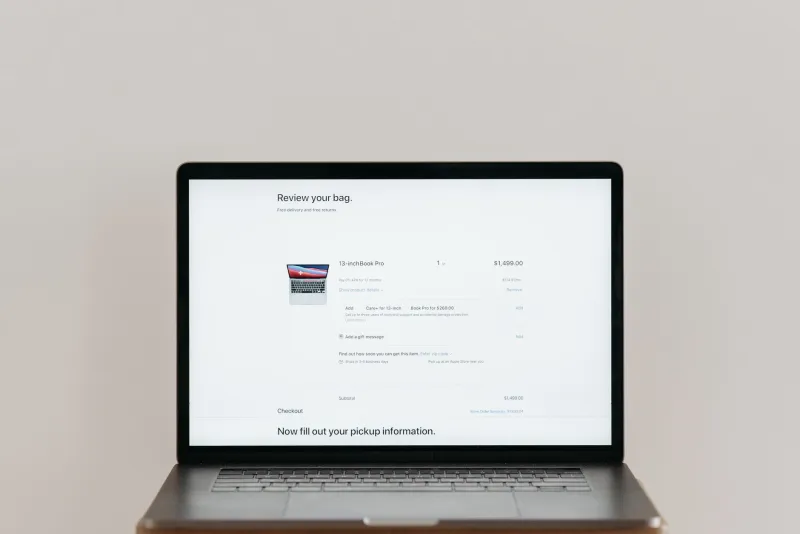
You've been there. You've spent twenty minutes comparing products, reading reviews, maybe even opening a separate tab to double-check the price somewhere else. You're finally ready to commit. And then — boom. A little red badge appears next to the product image. Only 2 items left in stock! A countdown timer ticks down from ten minutes. Your stomach drops.
Suddenly, all that careful, deliberate thinking goes straight out the window.
This is not an accident. It is a feature, not a bug, of modern e-commerce design — and understanding how it works can save you from a whole lot of regret-fueled returns.
The Science of "Now or Never"
Retailers have known for decades that scarcity sells. Walk into any store and you'll see "LIMITED TIME OFFER" plastered on everything from cereal boxes to car dealerships. Online shopping just gave them a turbocharged version of the same trick.
Psychologists call it scarcity bias — our brains are hardwired to assign more value to things that seem rare or disappearing. Back in prehistoric times, this instinct helped humans compete for food and resources. Today, it helps Amazon move extra units of a blender you definitely didn't need.
When a website slaps a countdown timer or a low-stock warning on a product page, it triggers something called loss aversion — the psychological tendency to fear losing an opportunity more than we value gaining something equivalent. Behavioral economists have studied this extensively. We don't just want the blender more when it's almost gone. We fear missing out on it, which is a completely different and far more powerful motivator.
Retailers know this. Their UX designers know this. The entire checkout flow is often engineered around it.
So Is the Warning Actually Real?
Here's where it gets murky — and honestly, a little frustrating.
Some scarcity alerts are completely legitimate. A small boutique running low on a handmade item, a concert venue with genuinely limited seats, or a flash sale with a fixed inventory pool — these are real constraints. The clock is real. The shortage is real. If you wait, you actually might miss out.
But a significant portion of the "Only 3 left!" warnings you see on major retail platforms? They're either exaggerated, algorithmically generated based on browsing behavior rather than actual stock, or flat-out manufactured.
Several large e-commerce platforms have faced scrutiny over this. The Federal Trade Commission has flagged deceptive urgency tactics as a form of dark pattern design — user interface tricks that manipulate consumers into making decisions they wouldn't otherwise make. Some states have started paying closer attention too, particularly as online shopping complaints have climbed in recent years.
One tell-tale sign: refresh the page. If the "only 2 left" warning disappears or resets, that's a red flag. If the countdown timer restarts when you reopen the tab, the urgency is almost certainly manufactured. Genuine inventory systems don't work that way.
The Countdown Timer Playbook
Timers are their own beast. They come in a few different flavors:
Session-based timers are tied to your browsing session and reset when you close and reopen the page. These are almost always artificial pressure tactics.
Shipping cutoff timers are often real — "Order within 2 hours to get it by Friday" is typically tied to actual warehouse processing schedules, especially on platforms like Amazon. These are worth paying attention to if delivery timing matters to you.
Sale expiration timers can go either way. Some retailers genuinely end promotions at a specific time. Others quietly extend the sale the moment it "expires" because the timer itself is just there to create urgency, not to mark an actual deadline.
A quick trick: search for the same product in a private or incognito browser window. If the sale price and timer are identical without any of your browsing history attached, the deadline is probably real. If the timer is shorter or the "urgency" messaging is more aggressive when you're logged in, the site is personalizing the pressure based on your behavior.
Spotting the Manipulation Before It Spots You
Developing a little skepticism doesn't mean you need to become a paranoid shopper. It just means slowing down enough to ask a few quick questions before you click.
Does the scarcity message match the product type? A mass-produced item from a major brand sold by a massive retailer is almost never actually running out. If you see "Only 1 left!" on a name-brand kitchen appliance at a national chain, be skeptical. A limited-edition sneaker collab or a handmade Etsy item? That warning is probably worth taking seriously.
Check the product on multiple platforms. If it's "almost gone" on one site but fully available on three others, you're looking at a tactic, not a reality.
Give yourself a 10-minute pause. Set a timer on your phone. Go do something else. If you come back and still want the item, and the "urgency" warning is still there unchanged, that tells you something. Real scarcity moves. Fake scarcity just sits there looking stressed.
Look at the seller's review history. New sellers on marketplace platforms sometimes use aggressive scarcity messaging to push sales on items they have plenty of. Established sellers with thousands of reviews tend to rely less on psychological tricks.
When the Urgency IS Legitimate
We don't want to turn you into someone who second-guesses every purchase into paralysis. Sometimes the warning is real, and sometimes waiting genuinely costs you.
Black Friday and Cyber Monday doorbuster deals are a classic example — those prices on specific quantities are often real, and they do sell out. Same goes for limited-edition product drops, concert or event tickets, and travel deals tied to specific inventory blocks (airlines, hotels, rental cars).
The difference is usually context. Real scarcity tends to be specific: a particular size, a specific date, a named quantity tied to a documented promotion. Fake scarcity tends to be vague and emotionally charged: a blinking red number with no explanation of why stock is limited or where that number came from.
Shop Smarter, Not Faster
The whole point of scarcity tactics is to short-circuit your decision-making process. Retailers want you to stop comparing, stop researching, and just buy — right now, before someone else does.
The best defense is simply slowing down. Not every purchase deserves ten minutes of extra thought, but the ones triggering your anxiety probably do. If a warning is making your heart race, that's actually a signal to pause, not to click.
At ShopSpark, we're all about finding deals that actually make sense for your life — not deals that were engineered to feel urgent so someone else could move inventory faster. Next time that little red badge tries to rush you, take a breath. The item will probably still be there. And if it's not? There's almost always another one somewhere.