Your Brain Loves the Hunt More Than the Haul — And Retailers Know It

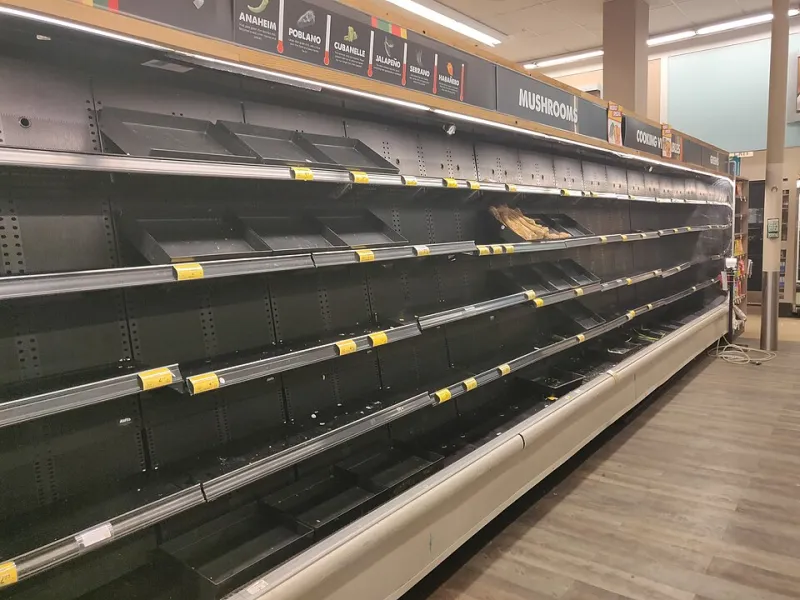
Photo: Alan Stanton, CC BY-SA 2.0, via Wikimedia Commons
Here's an uncomfortable question: when was the last time you actually enjoyed something you bought on deep discount?
Not the moment you clicked 'buy.' Not the little fist-pump when the 40%-off code worked. I mean the item itself, sitting in your home, doing the thing it was made to do.
If you're struggling to remember, neuroscience has an explanation — and it's not a character flaw. It's chemistry.
The Rush Arrives Before the Package Does
Researchers studying reward processing have found that dopamine — the neurotransmitter tied to anticipation and motivation — spikes highest not when we receive a reward, but in the moments we're chasing it. The hunt, the uncertainty, the near-miss: that's where the brain lights up.
A bargain supercharges this loop. Scoring a $200 item for $60 delivers two hits at once: the product AND the win. Your brain registers the savings as a gain, the same way it would a gambling payout. Some studies comparing shopping to slot machines found strikingly similar reward activity — variable outcomes, near-misses, the whole casino playbook.
And here's the kicker: by the time the box shows up on your porch, the dopamine party is largely over. The item is just... an item. Which explains the unopened packages in so many of our closets. We bought the feeling, not the thing.
Voices From the Cold-Turkey Club
I talked to three self-described deal addicts who quit the hunt — and their stories rhyme.
Marcus, 34, a teacher from Ohio, used to spend Sunday mornings refreshing coupon forums. 'I owned four air fryers at one point. All deals too good to pass up. I didn't even cook that much.' His trigger: deleting every shopping app for sixty days. 'The first two weeks were genuinely restless. I kept reaching for my phone during downtime. Then it just... got quiet.'
Dana, 41, from Arizona, tracked a year of 'deal purchases' and found she'd spent $4,200 on things she never used. 'The savings column said I was winning. The credit card statement said otherwise.' Her fix: a 72-hour rule plus one question — 'would I pay full price for this?' If the answer's no, the deal isn't a deal.
Both described the same withdrawal-and-recovery arc: restlessness, boredom, then a surprising calm. 'I don't miss the stuff,' Marcus told me. 'I miss the buzz. So I had to find a new buzz.'
Where to Put That Energy Instead
If deal-hunting is your thrill delivery system, going cold turkey without a replacement is a recipe for relapse. The ex-hunters I spoke with redirected the chase toward pursuits with the same structure — variable rewards, skill progression, the occasional jackpot — minus the cardboard boxes:
- Reselling and thrifting with a purpose. Hunting for items to flip turns the deal instinct into actual income. The hunt stays; the hoarding goes.
- Games and hobbies with progression loops. Chess puzzles, disc golf, fantasy leagues — anything with streaks and rankings scratches the same itch.
- The 'savings scoreboard' swap. Dana now tracks money moved into her emergency fund the way she used to track coupon scores. Same dopamine, better interest rate.
- Skill-building with visible wins. Learning an instrument or a language delivers small, unpredictable breakthroughs — the near-miss magic, without a checkout button.
The Deal With Deals
None of this means you should stop saving money. Price comparison and patience are genuinely good financial habits. The trap is the chase itself — buying things you don't need because the discount, not the item, is the product.
The next time a flash sale sets your pulse racing, try naming what's happening: that's anticipation, not need. Then ask the only question that matters. Would you want this at full price?
If the answer is no, congratulations. You just spotted the scam your own brain was running on you.